Security & VPN
Sucuri Review 2026: Is It Still Worth It for Website Security?
The verdict
Affiliate Disclosure: ToolNerdy.com participates in affiliate programs including Commission Junction (CJ). When you click links and make purchases, we may earn a commission at no extra…
Affiliate Disclosure: ToolNerdy may earn a commission from links in this post, at no extra cost to you. We don’t accept paid placements, and the pricing below reflects Sucuri’s published rates at the time of writing.
Sucuri has been one of the best-known names in website security for over a decade, built around a simple pitch: scan your site for malware, clean it when it gets hacked, and put a firewall in front of it so it doesn’t happen again. In 2026 there are cheaper plugins and bundled host-level options competing for the same job, so the real question is whether Sucuri’s all-in-one platform still earns its price. This overview is based on Sucuri’s published plans and features plus the broad consensus of public reviews — not hands-on lab testing, and not a paid placement.
Who Sucuri is for
- Site owners who’ve been hacked once and never want to deal with it alone again
- Small businesses and bloggers running WordPress, Joomla, or other CMS platforms that are common attack targets
- Agencies and freelancers managing client sites who need dependable malware cleanup
- Anyone who wants a firewall (WAF) and CDN in front of their site without configuring it from scratch
If your only concern is a basic plugin-level scan and you’re comfortable cleaning infections yourself, Sucuri may be more than you need — that’s the honest trade-off discussed below.
What stands out
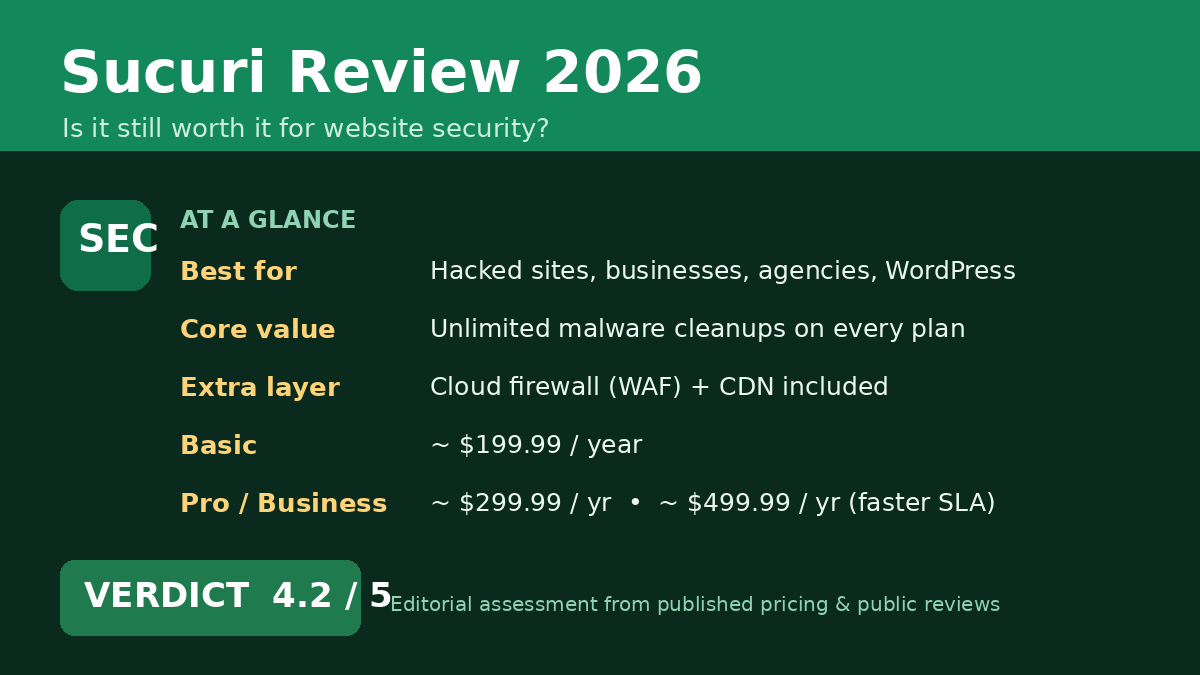
Unlimited malware cleanups. Every Platform plan includes unlimited manual cleanup requests at no extra fee. If your site gets reinfected, Sucuri’s analysts will clean it again without nickel-and-diming you per incident.
A real firewall, not just a scanner. Sucuri’s platform pairs monitoring with a cloud-based Web Application Firewall (WAF) and CDN, blocking attacks before they reach your server and speeding up delivery at the same time.
Platform-agnostic. Sucuri works across CMS platforms rather than being locked to WordPress, which makes it a sensible single tool for a mixed stack or varied client sites.
Established track record. Sucuri’s long history in incident response is part of why it’s so widely trusted for the “my site is hacked, help” scenario.
Where it falls short
The most common honest criticism is price. Starting at around $200/year, Sucuri is meaningfully more expensive than basic security plugins, and budget-conscious owners of low-risk personal sites may struggle to justify it.
Cleanup speed is also tiered — the entry plan’s response time is slower than higher tiers, pushing urgent users toward pricier plans. And getting the full firewall benefit means routing your DNS through Sucuri, an extra setup step some find fiddly. Finally, Sucuri is a focused security tool, not an all-purpose optimizer; it won’t replace dedicated caching, SEO, or backup solutions.
Pricing (2026)
Sucuri’s Website Security Platform is billed annually across three main tiers, all including unlimited cleanups and the firewall:
- Basic Platform: ~$199.99/year — ongoing scanning and unlimited cleanups, best for personal sites and blogs
- Pro Platform: ~$299.99/year — faster cleanup response and added support features, aimed at small businesses
- Business Platform: ~$499.99/year — fastest cleanup response and most frequent scanning, for sites where downtime is costly
- Agency / Enterprise: custom pricing for managing multiple sites
The practical decision is about response time: the more downtime would cost you, the more the jump to Pro or Business is worth it. For a hobby site, Basic is usually plenty.
Verdict
Our take: 4.2 / 5 (an editorial assessment based on Sucuri’s published features and pricing and the weight of public reviews, not hands-on benchmarking)
Sucuri remains one of the most dependable choices in website security in 2026, and the unlimited-cleanup-plus-firewall combination is genuinely strong value for anyone who treats their site as a real asset. It loses a fraction of a point on price and on the DNS setup step.
If you run a business site, e-commerce store, or client sites where a hack means lost revenue, Sucuri is an easy recommendation. If you run a low-traffic personal blog and you’re comfortable handling the occasional scare yourself, a lighter, cheaper option may serve you better.
Sources: Capterra, G2, SoftwareSuggest.